
Deciding to get help for opioid use is one thing. Actually picking up the phone and calling a clinic? That’s the part that stalls people out for weeks, sometimes months. If you’re searching for suboxone treatment near me right now, here’s the straight answer before anything else: your first week will involve an intake assessment, a same-day or next-day induction where you take your first dose under medical guidance, a few days of your body adjusting, and at least one follow-up appointment before the week is out. Nobody hands you a bottle of Suboxone and sends you off to figure it out solo.
I’ve talked to enough people who delayed treatment simply because they couldn’t picture what day one actually looked like. That gap between “I want help” and “I know what happens next” is where a lot of good intentions die. So let’s close that gap. The timing, the exact dose, how fast your withdrawal symptoms ease up, none of that is identical from person to person. A clinician has to look at your history, your current opioid use, and what else is going on with you before deciding the specifics. But the shape of the week? That’s fairly predictable, and it’s worth walking through before you ever dial a number.
Key Takeaways
Before the deep dive, here’s what actually matters if you’re nervous about this first step:
- Day one is assessment, not a leap of faith. The care team reviews your substance use history, current withdrawal symptoms, other medications, and any co-occurring mental health challenges before deciding when induction should start.
- The first week is an adjustment window, not a finish line. Clinicians typically monitor cravings, withdrawal symptoms, and how your body responds to buprenorphine, adjusting the plan as they go.
- You’re not left to wing it. A legitimate suboxone clinic tells you when to dose, when to check back in, and what to do if something feels off.
What Happens on the First Day of Suboxone Treatment?
Question: What Happens on the First Day of Suboxone Treatment?
Answer: Day one is an intake appointment followed by an individualized induction plan, not a script everyone follows identically. The clinician talks through your opioid use, how long it’s been since your last use, and where your withdrawal symptoms currently sit on the spectrum. Then comes the actual suboxone induction day one moment: the first dose, administered based on your specific presentation rather than a copy-paste protocol. If you’ve read a forum post describing someone else’s exact dosing schedule, do yourself a favor and ignore it. Your circumstances aren’t theirs.
Before Day One: What Happens When You Schedule Treatment
Contacting a provider is usually less intimidating than people build it up to be in their head. Most suboxone treatment near me searches end with a phone call or online form, and what follows is fairly routine: basic information collection, a few questions about current opioid use and past treatment attempts, and insurance or payment details. Some clinics run this entirely through telehealth suboxone treatment, which has become far more common since federal prescribing restrictions loosened. The Drug Enforcement Administration and telehealth flexibilities tracked by ASAM have made it legally viable for clinicians to prescribe buprenorphine through qualifying virtual visits, which matters a lot if you live somewhere without a local care clinic.
You don’t need every detail sorted before that first call. The clinic will ask what they need to ask. Bring identification, insurance information if you have it, and an honest account of your current opioid use. That’s genuinely most of it.
Day One: Inside Suboxone Induction
Induction sounds clinical, but it’s really just the process of getting buprenorphine into your system safely for the first time. Break it into three moves.
- Assessment. The provider walks through your medical background, current withdrawal symptoms, and any related disorders, including mood disorders or anxiety disorders that often travel alongside opioid use disorder. This isn’t paperwork for its own sake. It shapes everything that follows.
- Starting the medication. Buprenorphine, the active ingredient paired with naloxone in Suboxone, is a partial opioid agonist. It binds to the same opioid receptors as heroin or prescription painkillers, but only partially activates them, which is why it’s classified and monitored as a Schedule III controlled substance rather than something riskier. The naloxone component is largely inactive unless the medication is misused by injection, where it discourages that route of use. Your clinician decides timing and dose. Don’t borrow someone else’s schedule.
- Monitoring. Why do opioid cravings last so long? After that first dose, the team checks how you’re feeling, whether cravings have eased, whether withdrawal symptoms are lifting, and whether anything concerning has popped up. You’ll get instructions on when to take your next dose and when to come back.
One safety note worth flagging here: the FDA has issued warnings about dental problems linked to buprenorphine medicines dissolved in the mouth, so ask your prescriber about oral care during treatment. Small detail, but it’s the kind of thing that gets skipped in the excitement of finally starting.
Days 2 and 3: The Adjustment Stretch
This is where things get individual fast. Some people feel noticeably steadier by day two. Others still feel off, foggy, irritable, or hit with waves of craving that seem to come from nowhere. Both experiences are within normal range. What the clinic is watching for during this stretch includes withdrawal symptoms that haven’t resolved, new or worsening cravings, side effects like nausea or headache, and whether you’re able to actually follow the dosing plan as prescribed.
Communicating with your treatment center during these two days matters more than most people realize going in. A dose that felt fine on day one might need tweaking by day three. That’s not failure, that’s just how medication management works with something as individualized as opioid use disorder treatment.
Days 4 Through 7: Settling Into a Routine
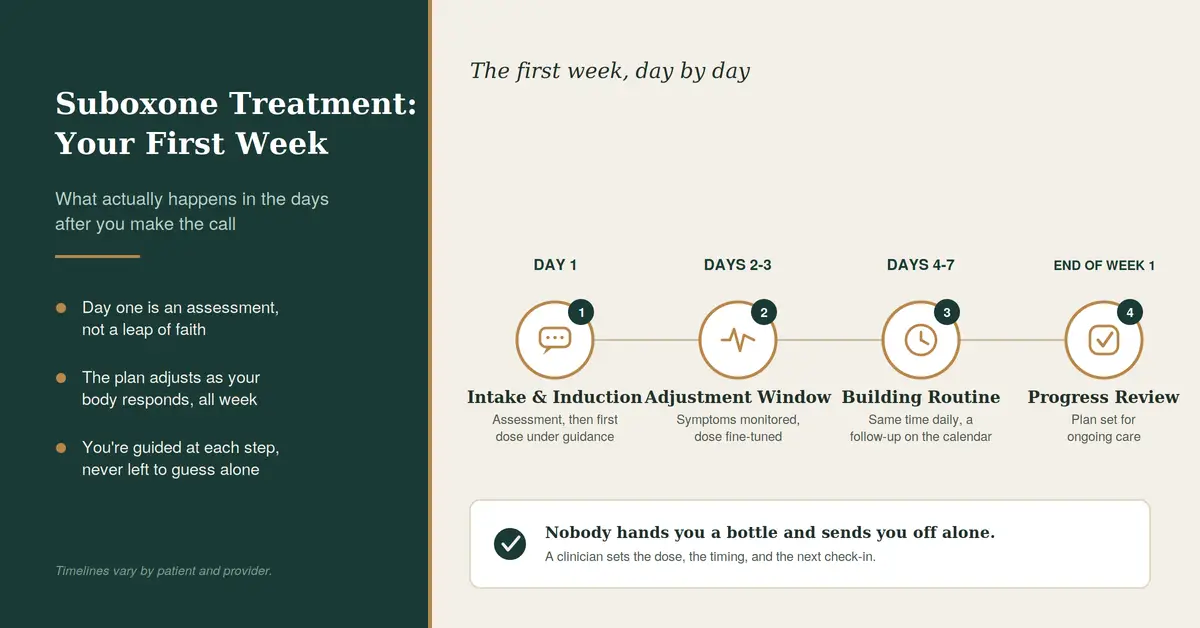
| Timeframe | What’s Typically Happening |
|---|---|
| Day 1 | Intake, assessment, induction, first dose |
| Days 2-3 | Symptom monitoring, possible dose adjustment |
| Days 4-7 | Establishing routine, first follow-up appointment |
| End of Week 1 | Review of progress, plan for ongoing dosing |
By the back half of week one, most people have a working rhythm: same time each day for medication, a clearer sense of how their body responds, and a follow-up appointment either completed or on the calendar. Cravings don’t necessarily vanish by day seven, and that’s worth saying plainly because plenty of people assume something’s wrong if they still want to use. It usually just means the treatment plan needs a conversation, not an abandonment.
Why Do Opioid Cravings Last So Long?
Cravings persist because opioid use disorder rewires the brain’s reward and stress circuitry, not because someone lacks willpower. According to research summarized by the National Institute on Drug Abuse, repeated opioid exposure alters how the brain processes pleasure, stress, and pain, and those changes don’t reverse the moment someone stops using. Add in environmental cues, like a certain street corner, a specific stressor, or even a smell tied to past use, and you’ve got a craving trigger that has nothing to do with current willpower.
Physical cravings and psychological cravings often overlap, which is part of why recovery feels so exhausting in the early going. Medicine like buprenorphine helps blunt the physical intensity, but the psychological piece, the emotional pull, the habit loops, often needs counseling or behavioral support running alongside it. Persistent cravings are a signal to talk with your care team, not a reason to quit.
How to Stop Heroin Cravings While Starting Treatment
There’s no single switch that answers how to stop heroin cravings. And anyone promising that is overselling it. What actually helps is layered: staying consistent with your prescribed medication, staying in contact with your treatment team, identifying your personal triggers, and reducing exposure to high-risk situations where you reasonably can. Buprenorphine maintenance therapy addresses the physical side of opioid cravings by occupying those same receptors without producing the euphoric high, which takes a huge amount of pressure off day-to-day life for a lot of patients.
Counseling and peer support add the piece medication alone can’t cover. If cravings feel intense or constant, that’s information for your clinician, not something to white-knuckle through alone or manage by adjusting your own dose. Unsupervised changes to a Suboxone regimen carry real risk, and it defeats the purpose of having a qualified provider guiding the process in the first place.
What Happens After Your First Week?
Week one is the opening chapter, not a final exam. Ongoing follow-up appointments let your provider track treatment response, cravings, withdrawal symptoms, and side effects over time, adjusting the plan as your needs shift. Some patients stay on a stable dose for months. Others need changes early on. Federal data reviewed by the CDC on buprenorphine access shows that consistent, ongoing use is strongly tied to better outcomes, which is part of why providers push follow-up so hard instead of treating induction as the endgame.
Needing an adjustment doesn’t mean the treatment failed. It means the treatment is being managed the way it’s supposed to be.
Ready to Start? Book Your Intake
If the uncertainty was the thing holding you back, that part’s handled now. The sequence is simple: call, complete intake, get assessed, go through induction, and follow up. First City Recovery Center works through exactly that process for people who are ready to start but want a team walking alongside them through day one and beyond. Confirm current availability, accepted insurance, and appointment hours directly with the clinic, since these details shift.
But the first move is the same one it’s always been: pick up the phone and start the intake conversation. You can also use National Helpline if you want to compare options before committing to a specific center.
FAQs
What should I expect during my first week on Suboxone?
Expect an intake assessment, day-one induction, a few days of symptom monitoring, and at least one follow-up appointment. Dosing gets adjusted based on how you respond, and cravings or withdrawal symptoms are tracked throughout the week rather than assumed to resolve instantly.
What happens on Suboxone induction day one?
Assessment comes first, covering your opioid use history and current withdrawal status. The clinician then determines an individualized induction approach and starts medication accordingly, followed by instructions for dosing and your next appointment.
Why do opioid cravings last so long?
Cravings involve physical, psychological, and environmental components, and opioid use disorder changes brain circuitry tied to reward and stress. Triggers can persist well after opioid use stops, which is why ongoing cravings are worth discussing with your care team rather than facing alone.
How can I stop heroin cravings when starting treatment?
Medication-assisted treatment helps manage the physical intensity of cravings, but following your prescribed plan, identifying personal triggers, and using counseling or peer support all play a role. Persistent cravings should be brought to your clinician rather than managed independently.
How do I find Suboxone treatment near me?
Search for local providers, confirm they’re accepting new patients, and ask about intake timing, accepted insurance, and appointment availability. If First City Recovery Center is your local option, reaching out directly is the fastest way to get accurate, current answers.