
Mental health conditions are often misunderstood. Many people assume that struggles like anxiety or depression are always visible—that those affected appear overwhelmed, withdrawn, or unable to function. In reality, that isn’t always the case.
Some individuals live with mental health conditions while continuing to meet daily responsibilities, maintain relationships, and appear “fine” on the surface. This experience is commonly referred to as high-functioning mental illness.
Although awareness of mental health has improved, high-functioning mental illness is still frequently overlooked. Because symptoms are often hidden, those affected may not receive the understanding, support, or treatment they need. In this article, we’ll explore what high-functioning mental illness means, common examples, warning signs, and available treatment options.
Key Takeaways
- High-functioning mental illness is often hidden. Individuals may appear successful and stable on the outside while silently struggling with anxiety, depression, or other mental health conditions.
- Functioning well does not mean symptoms are mild or harmless. Because signs are less visible, high-functioning mental illness can go untreated and worsen over time without proper support.
- Treatment is effective and essential. Therapy, and when needed, medication or integrated care on a mental health treatment center such as First City Recovery in Kokomo, Indiana, for co-occurring substance use, can help individuals manage symptoms and improve long-term mental well-being.
What is High-Functioning Mental Illness?
High-functioning mental illness refers to a mental health condition in which a person is able to manage daily responsibilities—such as work, school, or relationships—while still experiencing ongoing psychological distress.
Individuals may appear successful, productive, and emotionally stable on the outside, yet struggle internally with symptoms like anxiety, depression, chronic stress, or intrusive thoughts. Because the signs are often subtle or hidden, high-functioning mental illness can go unnoticed and untreated, even though it may significantly impact a person’s emotional well-being and quality of life.
What Does “High-Functioning” Mental Illness Mean?
Mental illnesses exist on a spectrum of severity. Some conditions significantly interfere with a person’s ability to work, socialize, or care for themselves. Others allow individuals to continue functioning outwardly while struggling internally.
A person with a high-functioning mental illness may:
- Maintain a job or academic performance
- Fulfill social or family responsibilities
- Appear emotionally stable to others
Despite this outward stability, they may be dealing with persistent anxiety, depression, intrusive thoughts, or emotional distress behind the scenes.
Being “high-functioning” does not mean the condition is mild or unimportant—it simply means the symptoms are less visible to others.
High-Functioning vs. Low-Functioning Mental Health Conditions
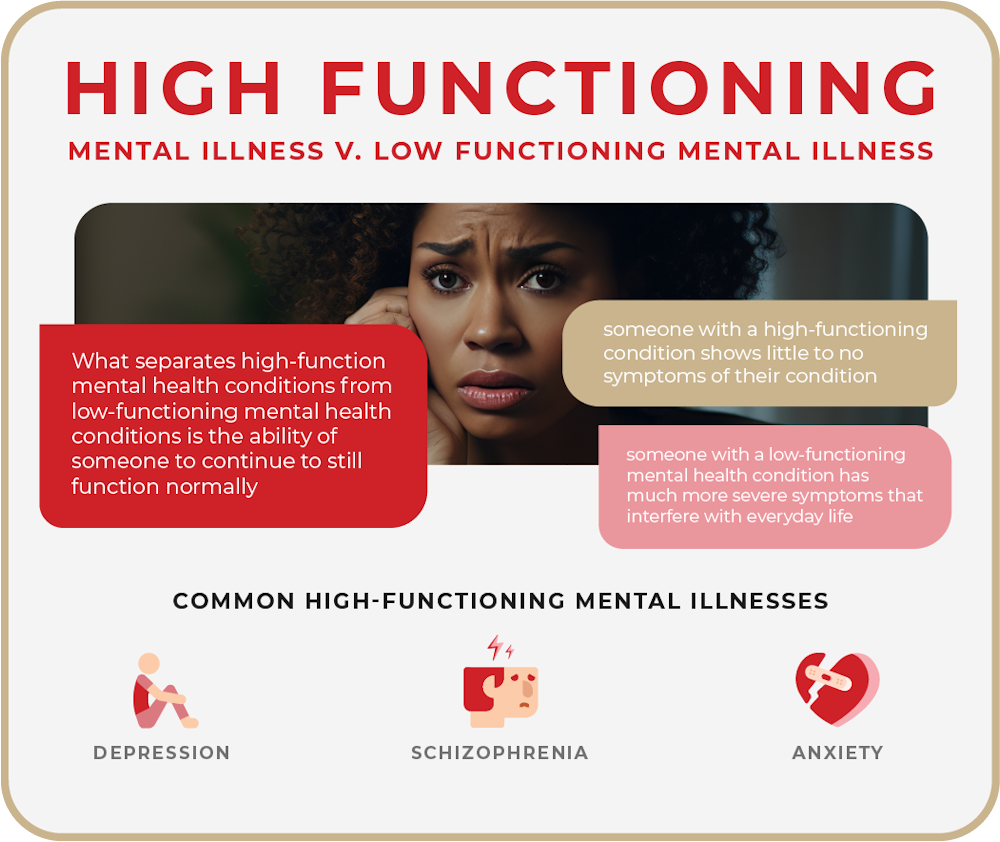
The primary difference between high-functioning and low-functioning mental health disorders is how much symptoms interfere with daily life.
- High-functioning mental illness: Symptoms are present but do not visibly disrupt daily responsibilities.
- Low-functioning mental illness: Symptoms are more severe and significantly impair work, relationships, or self-care.
Ironically, high-functioning mental illness can be especially risky because it often goes unnoticed. Friends, family, and coworkers may assume the person is doing well, leaving the individual to cope alone. Without recognition or intervention, symptoms can worsen over time.
Common Examples of High-Functioning Mental Illness
By definition, anyone who is suffering from a mental health condition that doesn’t prevent them from going about their daily life or that doesn’t involve noticeable symptoms on the surface is suffering from a high-functioning mental illness. That being said, there are certain mental health conditions that are more common to be high-functioning than others.

Often associated with persistent depressive disorder (formerly dysthymia), high-functioning depression involves long-term feelings of sadness, emptiness, or low self-worth that may not appear severe on the surface. Individuals may still go to work and meet obligations while feeling emotionally drained or disconnected internally.
Anxiety is a normal human response to stress, but when worry becomes excessive and constant, it may indicate an anxiety disorder. People with high-functioning anxiety often appear productive, responsible, and organized, yet internally struggle with racing thoughts, fear of failure, and chronic tension.
While schizophrenia is often associated with severe impairment, some individuals experience milder symptoms that allow them to maintain daily functioning. These individuals may still experience hallucinations, delusions, or emotional blunting, but manage symptoms well enough to work or socialize.
Signs of High-Functioning Depression and Anxiety
Because symptoms are subtle, high-functioning mental illness can be difficult to recognize—even for the person experiencing it.
Possible signs of high-functioning depression include:
- Chronic fatigue or low energy
- Difficulty feeling joy or satisfaction
- Low self-esteem
- Trouble concentrating
- Persistent sadness or emptiness
- Insomnia or changes in appetite
Possible signs of high-functioning anxiety include:
- Constant overthinking or rumination
- Fear of failure or disappointing others
- Difficulty relaxing
- Excessive worry
- Nervous habits or restlessness
- Trouble sleeping
These symptoms may be dismissed as stress or personality traits, which can delay treatment.
Is High-Functioning Mental Illness Treatable?
Yes. High-functioning mental illness is absolutely treatable—and treatment is just as important as it is for more visible conditions.
Many individuals with high-functioning mental health disorders also struggle with substance use as a way to cope. When mental health and substance use occur together, integrated treatment is essential.
Psychotherapy is a cornerstone of mental health treatment. Cognitive Behavioral Therapy (CBT) is especially effective, helping individuals identify unhealthy thought patterns, understand triggers, and develop healthier coping strategies.
In some cases, medication such as antidepressants or anti-anxiety medications may be recommended alongside therapy. While not always necessary for high-functioning conditions, medication can help manage symptoms and improve quality of life when appropriate.
If substance use is present, detoxification may be the first step. Detox helps clear substances from the body so the brain can begin healing, and treatment can be more effective. Detox should always be medically supervised.
Getting Help for High-Functioning Mental Illness
Struggling silently doesn’t mean you don’t need help. Whether symptoms are severe or subtle, mental health support can make a meaningful difference.
At First City Recovery Center, we treat both mental health conditions and co-occurring substance use disorders. Our programs are designed to address the whole person—not just the most visible symptoms.
We provide treatment for:
- Anxiety
- Depression
- Bipolar disorder
- Post-traumatic stress disorder (PTSD)
- Dual diagnosis conditions
If you or someone you love is living with a high-functioning mental illness, help is available. Contact First City Recovery Center today to learn more about personalized treatment options and take the first step toward lasting mental wellness.

MD, Psychiatrist
Dr. Vahid Osman, MD is a psychiatry specialist in Indianapolis, IN.
Dr. Osman completed a residency at Austin State Hospital. He has over 32 years of experience in Psychiatry & Behavioral Health. He is board certified by the American Board of Psychiatry and Neurology.